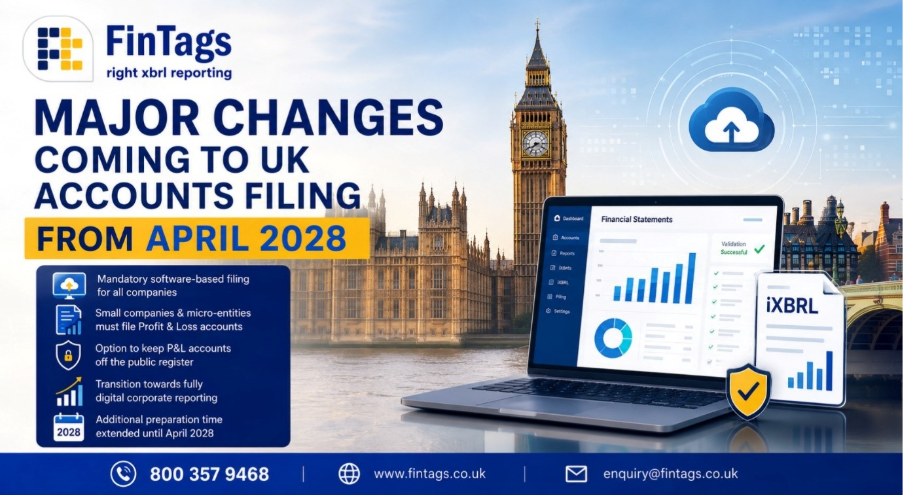
If you run a UK limited company, the way you file your annual accounts is about to change in a meaningful way. On 9 June 2026, Companies House confirmed how it will roll out a major package of accounts reforms and the start date has been pushed back to April 2028, giving businesses a longer runway to prepare.
The headline changes are significant: small companies and micro-entities will have to file profit and loss accounts, abridged accounts are being scrapped, and every company will be required to file accounts through commercial software. Below, we break down exactly what’s changing, who it affects, and the steps you should take now.
From April 2028, UK companies will see four core changes to accounts filing:
These reforms come from the Economic Crime and Corporate Transparency Act 2023 (ECCT Act 2023), and the aim is to make the companies register more accurate, more transparent, and harder to misuse for economic crime.
The changes sit within a wider government drive to clean up and modernise the companies register. According to Companies House, the reforms are designed to improve the transparency, accuracy and reliability of the data held on the register, support better business decisions, bring UK practices in line with other countries, and help tackle fraud and economic crime.
In plain terms: better-quality data on the register makes life harder for bad actors and more useful for legitimate businesses, lenders and investors who rely on it.
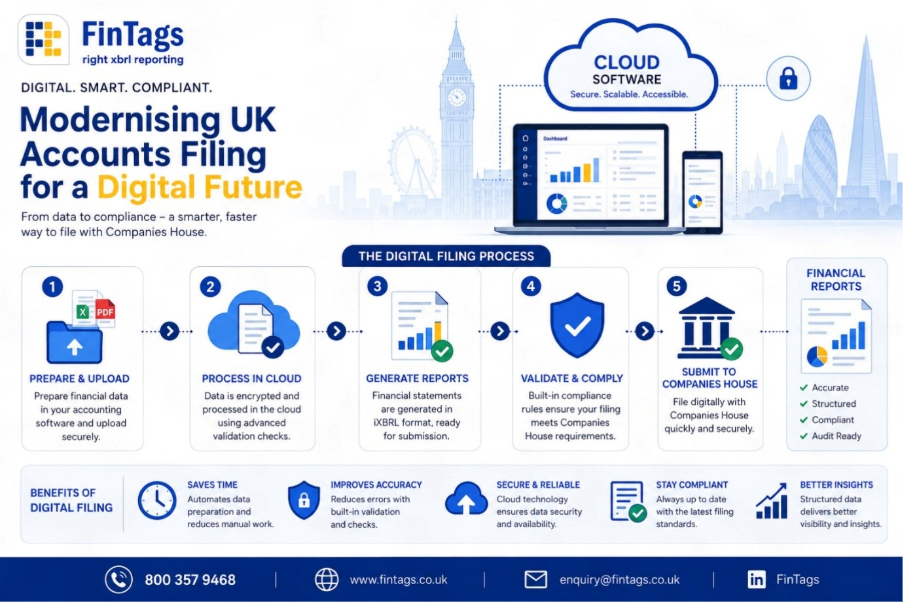
Of all the changes, the move to software-only accounts filing is the one that will touch every single company.
From April 2028, all UK-registered companies must file their annual accounts using commercial software, in Inline eXtensible Business Reporting Language (iXBRL) format. This applies whether you currently file your own accounts directly or use an accountant or agent to file on your behalf. From that date, the Companies House web filing and paper filing services will no longer accept accounts.
A few important clarifications:
If you currently rely on the free web filing service, this is the change that needs the most planning you’ll need a software solution in place well before the deadline.
Under the new rules, small companies and micro-entities will have to file a profit and loss account with Companies House, just as larger companies do.
This was one of the more contentious proposals, because many smaller business owners worried about competitors and the wider market seeing detailed financial information. In response, the government has built in a key concession: smaller companies will be able to opt out of publishing their profit and loss accounts on the public register.
Here’s how that balance works in practice:
The exact mechanism for opting it out will be confirmed by Companies House in due course.
Alongside the headline reforms, several other changes are coming in from April 2028:
icon and bold line in same line break the normal line into senod line
Originally, these reforms were due to land in April 2027. Companies House has now confirmed they’ll take effect from April 2028 instead a deliberate decision to give businesses more breathing room.
In practice, this gives companies one full accounting year plus a further nine months around 21 months to get ready before the changes bite.
Companies House has also said it will contact every company directly via its registered email address to explain the changes and point to relevant guidance. That makes it more important than ever to ensure your registered email with Companies House is accurate and monitored.
April 2028 might feel comfortably far away, but the businesses that handle this smoothly will be the ones that prepare early. Here’s a practical checklist:
If you file accounts yourself through the Companies House web service, start researching compatible commercial software now.
If FinTags or another agent files on your behalf, confirm your filing software is iXBRL-ready and compliant with the new rules.
If you’re a small company or micro-entity, decide whether you’ll publish or opt out and consider the financing and transparency trade-offs.
Navigating regulatory change is exactly what we do. At fintags, we’re already preparing our clients for the move to software-only, iXBRL accounts filing making sure your year-end accounts are compliant, correctly filed, and handled without the stress.
Whether you’re a contractor, a growing SME, or a micro-entity weighing up the profit and loss opt-out, our team can help you understand your options and get ahead of the April 2028 deadline. Get in touch with fintags to talk through what these changes mean for your business.
The reforms take effect from April 2028. They were originally planned for April 2027 but were delayed, giving companies approximately 21 months more time to prepare.
Small companies and micro-entities will have to file a profit and loss account, but they can choose to opt out of publishing it on the public register. Companies House, HMRC and law enforcement will still be able to access the information.
No. From April 2028, accounts must be filed using commercial software in iXBRL format. The web and paper filing routes will close for accounts. However, you can still use Companies House web services for non-accounts filings such as confirmation statements and director updates.
iXBRL (Inline eXtensible Business Reporting Language) is a structured digital format that tags financial data so it can be read by both humans and software. It allows Companies House to analyse and compare company data more effectively.
No. The option to file abridged accounts is being removed as part of these reforms.
Companies House maintains a list of approved software providers on GOV.UK. Your accountant can also advise on or provide compliant filing software.
This article is based on the official Companies House announcement, “Companies House to bring in changes to accounts filing from April 2028” (published 9 June 2026). Contains public sector information licensed under the Open Government Licence v3.0.